



What is Tankless Reverse Osmosis?
A tankless reverse osmosis system is a modern upgrade to traditional under-sink water purification systems. With no bulky storage tank, it delivers high-quality filtered water directly from the tap, efficiently and instantly.
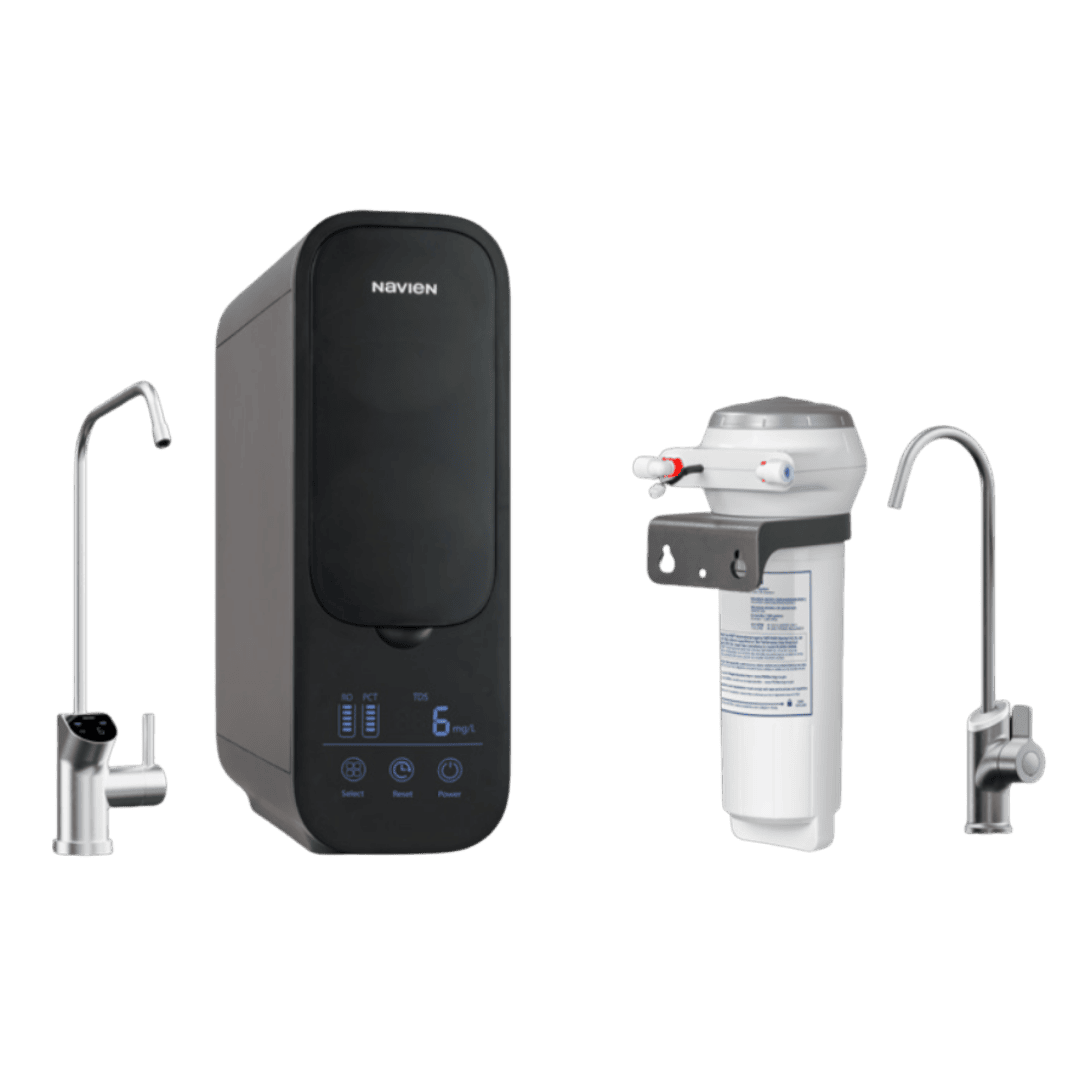
Here’s How a Tankless Reverse Osmosis System Works
-
Advanced Pre-Filtration
Water first flows through a set of precision-engineered filters to remove sediment, rust, chlorine, and other large impurities that affect taste and clarity.
-
Reverse Osmosis Membrane
At the heart of the system, a high-efficiency RO membrane filters out impurities such as select microscopic impurities, heavy metals, PFAS and nitrates.
-
Tankless Flow Technology
Unlike traditional systems, this unit doesn’t store water in a tank. Instead, it purifies water in real time as you use it, reducing stagnation and maximizing freshness.
-
Smart Monitoring Select models
Some models feature smart technology that tracks filter life and system performance, alerting you when it’s time for maintenance or replacement.
Overall, this system is designed to deliver consistent, purified water with a minimal footprint and maximum convenience.
Frequently Asked Questions
Traditional RO systems use a storage tank to hold filtered water, while tankless systems purify water on demand. This means no stored water sitting in a tank and often a sleeker, more compact design that saves space under your sink.
Yes. All reverse osmosis systems produce wastewater as part of the filtration process.
Typically, pre-filters should be changed every 6-12 months, and the RO membrane every 2-3 years, depending on water quality and usage. If you’re renting from Reliance, we deliver replacement filters annually for your convenience.
Homeowner Requirements for a Tankless Reverse Osmosis System
- Under-Sink Space: While tankless systems save space by eliminating the storage tank, they still require room for the filtration unit and plumbing connections. A quick under-sink measurement is recommended.
- Power Supply: Most tankless RO systems require access to a standard electrical outlet (usually 110V) to power the internal pump and filtration technology. If one isn’t available under the sink, an outlet will need to be installed.
- Water Pressure: Optimal incoming water pressure is usually between 40-100 psi. If your home has low water pressure, a booster pump might be required (some tankless systems include one built-in).
- Drain Connection: The system needs to be connected to a drain line to dispose of the wastewater produced during the filtration process. A nearby drain under the sink is essential.
- Cold Water Line Access: The system will connect directly to your home’s cold water line, so accessible plumbing is needed.
Why Choose Reliance for Your Water Purification Solution?
- High-performance, space-saving tankless water purification systems
- All repairs included with rental
- Trained, insured and certified plumbers
- Filter replacements delivered to your door annually (with rental)
- We’ll take your call 24/7
- Complimentary in-home water quality assessment
- 175,000+ 5-star user reviews on Google
- Member of the Canadian Water Quality Association
- Trusted by Canadian homeowners for over 60 years
- Serving 1M+ home comfort customers across Canada
Get Purified, Fresh-Tasting Water Today
Interested in upgrading to a reverse osmosis system? Book an in-home consultation with our water experts to explore the best filtration solution for your home.