

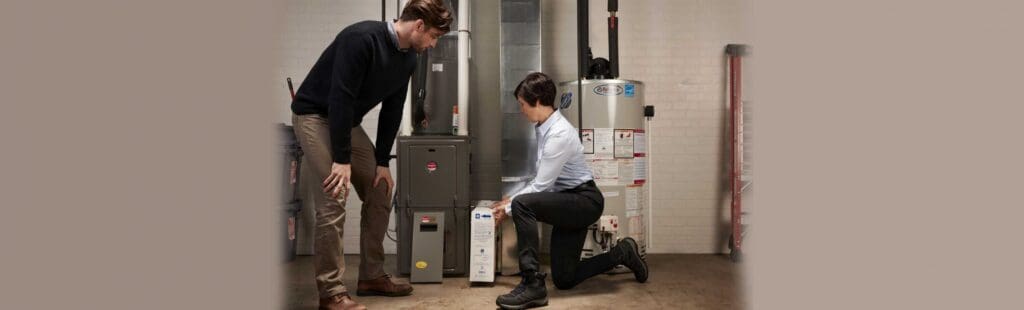
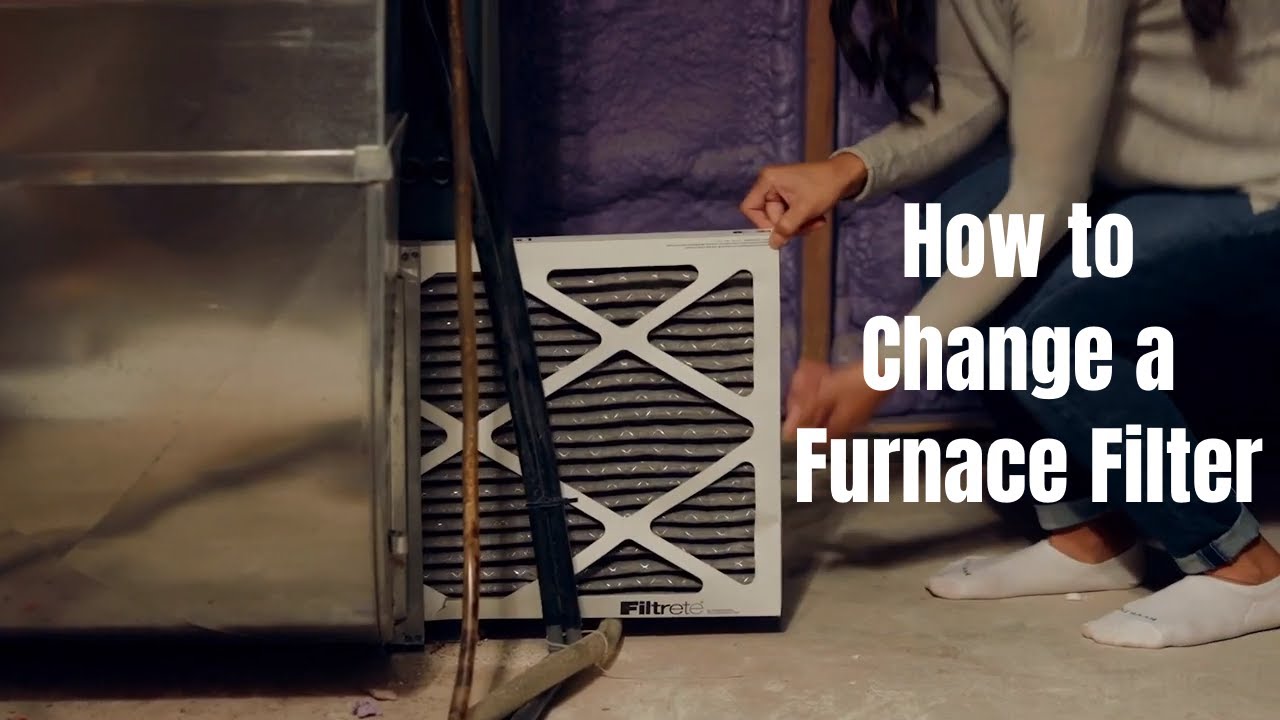
Like most people, you probably don’t give your furnace much thought as long as it’s
keeping you warm during the cold winter months.
But in order to keep your furnace running at peak efficiency, you’ll have to maintain
it and change the filter on a regular basis.
Furnace filters protect your furnace from dust, hair and other debris that gets drawn
in through the cold air return ducts.
If dirt gets into the furnace, it can increase fuel consumption and maintenance costs while
also reducing furnace life.
Furnace filters also remove dust and allergens from your home which can contribute to improved
air quality for you and your family.
If a filter looks dirty as you pull it out, it needs to be replaced or cleaned.
There are many types and sizes of filters.
Most have something called the MERV rating.
This is a number from 1 to 20 that identifies the effectiveness of the filter.
The higher the MERV rating, the better the filter is at capturing small particles.
A MERV rating between 7 and 13 is ideal for most homes.
Make sure the filter you choose isn’t too restrictive as this can cause your furnace
to work harder which could lead to increased energy usage and shorter equipment life.
The most common furnace filter has disposable pleated paper as the filtration element.
Pleated paper does a good job of removing most household particles and allergens with
a MERV rating of between 6 and 13.
Disposable fibreglass filters are an inexpensive option, but tend to have a lower MERV rating.
Inspect your furnace filter every 30 to 60 days.
The frequency of filter maintenance depends on a number of factors; the type of filter
you’re using, how many people live in the home, the amount of dust and if you have pets,
all affect the filter’s lifespan.
Changing a furnace filter is simple.
First, make sure your furnace is turned off so it doesn’t blow air when you remove the
filter.
Next, locate the filter housing on your furnace.
This is different for each model but you can normally find it between the air intake and
the furnace.
Open the compartment door and slide the filter out.
Compare the size and type of replacement filter with the old one.
Specifications should be printed on the side of the filter.
If size information isn’t printed on the filter frame, measure the filter yourself, rounding
up to the nearest half inch.
Slide the newer, clean filter in place with the arrows pointing towards the furnace in
the direction of air flow.
Secure the compartment cover, then turn your furnace back on.
Now all that’s left to do is set a reminder for your next inspection.
If you need assistance with any furnace maintenance or repair, Call on Reliance.
To change a furnace filter, turn the HVAC system off, locate the filter, note its size and airflow direction, remove it and install the correct replacement with the arrow pointing in the direction of airflow. Close the filter cover and turn the system back on. Replace disposable filters rather than washing them, and clean reusable filters only according to the manufacturer’s instructions.
Changing your furnace filter helps prevent dust and debris from accumulating inside your heating and cooling equipment. The important part is not only replacing the filter, but also choosing the correct replacement and installing it in the right direction.
Furnace filter locations, sizes and requirements vary by system. If the instructions for your equipment differ from the general steps below, follow the equipment manufacturer’s directions.
Before You Buy a Replacement Furnace Filter
Before removing the old filter, look for the following information printed on its frame:
- The filter dimensions
- The filter type
- The MERV rating, if provided
- The arrow showing the direction of airflow
- Whether the filter is disposable or reusable
Taking a photo of the old filter and its label can make it easier to find the correct replacement.
Choose the filter size, type and MERV rating recommended for your HVAC system. A higher MERV rating captures smaller particles, but it is not automatically the right choice for every system. Check the equipment or filter manufacturer’s instructions, or ask a qualified HVAC professional if you are unsure.
For more help comparing filter types and ratings, read our guide on how to choose an HVAC air filter.
Where Is the Furnace Filter Located?
The location of the furnace filter depends on the HVAC system and how it was installed. Common locations include:
- A filter slot beside the furnace
- A filter cabinet attached to the return-air duct
- Inside an accessible filter compartment
- Behind a return-air grille in the home
Look for a narrow slot, removable cover or labelled filter cabinet along the return-air side of the system. Do not remove unfamiliar equipment panels or open sealed compartments to search for the filter.
If you cannot locate the filter, check the equipment manual or ask a qualified HVAC professional before proceeding.
How to Change a Furnace Filter
1. Turn Off the HVAC System
Turn the system off at the thermostat before removing the filter. This prevents the blower from operating while the filter opening is uncovered.
2. Locate and Open the Filter Access
Find the normal filter slot, filter cabinet or return-air grille. Open the filter cover if the system has one.
Do not remove service panels or access internal furnace components.
3. Note the Filter Size and Airflow Direction
Before sliding out the old filter, note the dimensions printed on its frame and the direction of the airflow arrow. Taking a photo can help you install the replacement correctly.
If the old filter does not show a size, check the filter cabinet or equipment manual. Do not rely on rounding measurements to choose a replacement.
4. Remove the Old Filter
Slide the filter out carefully to avoid knocking accumulated dust and debris into the filter opening.
Place a disposable filter directly into a garbage bag if needed. Do not shake or attempt to clean a disposable filter.
5. Confirm That the Replacement Matches
Compare the new filter with the old one before installation. The dimensions and filter type should match the requirements for the system.
The filter should fit securely without being forced, bent or cut. Do not stack multiple filters unless the equipment manufacturer specifically requires that configuration.
6. Install the Filter in the Direction of Airflow
Install the new or properly cleaned reusable filter with the arrow on its frame pointing in the direction of airflow.
For a typical filter slot beside the furnace, the arrow usually points toward the furnace or blower. If the filter is installed in a return-air grille, follow the airflow marking and the equipment manufacturer’s instructions.
7. Close the Filter Cover
Close and secure the normal filter cover or grille. If the cover does not close properly, check that the filter is the correct size and has been inserted fully.
Do not force the cover closed.
8. Turn the System Back On
Return the thermostat to its normal setting and confirm that the system starts and operates as expected.
You can also follow our guide on how to test your furnace before winter.
Which Way Should the Furnace Filter Arrow Point?
The arrow printed on the filter frame shows the direction that air should travel through the filter. It should point toward the HVAC equipment and in the same direction as the system’s airflow.
In many systems with a filter slot beside the furnace, the arrow points toward the furnace or blower. However, the correct direction depends on where the filter is installed. A filter in a return-air grille may point away from the room and into the return duct.
If the direction is unclear, check for an airflow label on the filter cabinet or consult the equipment instructions.
How Often Should You Change a Furnace Filter?
There is no single replacement schedule for every furnace filter. Check the filter regularly and follow the replacement interval provided by the filter and equipment manufacturers.
How quickly a filter becomes dirty can be affected by:
- The filter type and design
- How frequently the heating or cooling system operates
- Conditions inside the home
- Renovation or construction dust
- Whether there are pets in the home
Replace a disposable filter when it is visibly dirty or when it reaches the manufacturer’s recommended replacement interval. If filters become heavily soiled unusually quickly, consider having the system checked rather than simply replacing filters more frequently.
Can You Clean and Reuse a Furnace Filter?
Clean and reuse a furnace filter only if it is specifically identified as reusable or washable.
Follow the filter manufacturer’s cleaning and drying instructions. Do not reinstall a reusable filter until it is ready for use according to those instructions.
Disposable filters should be replaced, not vacuumed, rinsed or washed. Cleaning a disposable filter may damage its filtration material or frame.
Common Furnace Filter Mistakes
| Common mistake | What to do instead |
|---|---|
| Buying a filter based only on approximate measurements | Use the dimensions printed on the old filter, filter cabinet or equipment instructions. |
| Installing the filter backwards | Follow the airflow arrow printed on the filter frame. |
| Choosing the highest available MERV rating | Choose a filter rating that is appropriate for the HVAC system. |
| Washing a disposable filter | Replace disposable filters and clean only filters identified as reusable. |
| Forcing a filter into the opening | Confirm the size and type if the replacement does not fit securely. |
| Operating the system without a filter | Install the correct filter before returning the system to normal operation. |
| Forgetting to close the filter cover | Make sure the normal filter cover or grille is closed securely. |
When Should You Ask for Help?
Consider contacting a qualified HVAC professional if:
- You cannot locate the furnace filter
- The filter size or required type is unclear
- The replacement filter does not fit securely
- The filter cover will not close normally
- The filter becomes heavily soiled unusually quickly
- Airflow remains weak after the filter is replaced
- The system does not operate normally after the filter change
Do not force a filter into place, modify the filter or remove unfamiliar furnace panels.
For more information about ongoing furnace care, read our furnace tune-up FAQs.
Not Sure Which Filter Your System Needs?
If you cannot locate the filter, confirm the correct size or determine which filter type your equipment supports, do not force a filter into the opening or remove unfamiliar equipment panels.
Reliance Home Comfort® offers 24/7/365 live phone support. As-soon-as same-day furnace repairs may be available.
Learn about furnace repair services and book an appointment, or call 1-888-837-1451.
Frequently Asked Questions About Furnace Filters
How do I know what size furnace filter I need?
Look for the dimensions printed on the frame of the existing filter, the filter cabinet or the equipment instructions. Keep the dimensions in the same order when purchasing a replacement. If the size is unclear, ask a qualified HVAC professional rather than relying on an approximate measurement.
Which way should the arrow on a furnace filter point?
The arrow should point in the direction of airflow. In a typical filter slot beside the furnace, it usually points toward the furnace or blower. If the filter is located in a return-air grille, use the airflow markings and equipment instructions to confirm the direction.
How often should I change my furnace filter?
There is no single schedule for every filter. Check it regularly and follow the replacement interval provided by the filter and equipment manufacturers. Replace a disposable filter when it is visibly dirty or reaches its recommended replacement interval.
Can I wash and reuse a furnace filter?
You can clean and reuse a filter only if it is specifically identified as reusable or washable. Follow its manufacturer’s cleaning and drying instructions. Disposable furnace filters should be replaced rather than washed or vacuumed.
What happens if a furnace filter is installed backwards?
A furnace filter is designed to be installed in the direction shown by the airflow arrow on its frame. If it has been installed backwards, turn the HVAC system off and reinstall the filter in the correct direction.
Can I run my furnace without a filter?
The correct filter should be installed before the furnace is returned to normal operation. The filter helps prevent dust and debris from accumulating inside the HVAC equipment.
Why does my new furnace filter not fit?
The dimensions may be incorrect, the measurements may be in the wrong order or the system may require a different filter type. Do not force, bend, trim or stack filters to make them fit. Confirm the required filter using the old filter, filter cabinet or equipment instructions.
Do my furnace and central air conditioner use the same filter?
A central heating and cooling system may use the same return-air filter for both heating and cooling, but HVAC configurations vary. Check your equipment instructions or ask a qualified HVAC professional if you are unsure.


Check out our latest Furnace offers here!
See Latest OffersRelated Articles