



Heat Pump Not Working? Here’s What to Do
When your heat pump stops heating or cooling, the issue can range from a simple thermostat setting to a component failure that requires a licensed technician. This page covers some of the most common heat pump problems, what you can check yourself before calling for service, and when to call a professional.
Reliance has one of the largest networks of licensed HVAC technicians in Canada and offers as-soon-as same day repairs, even on holidays. We service all brands, makes and models, including:
- Central air source heat pumps
- Ductless mini-split heat pumps (single and multi-zone)
- Hybrid/dual-fuel heat pump systems
- Cold-climate heat pump models

Call Us to schedule a service appointment
Our team of licensed technicians are ready to service your issue FAST
Our technicians are trained on the latest AC repair techniques for a wide range of leading AC brands and units. Call us 24 hours a day, 7 days a week, 365 days a year
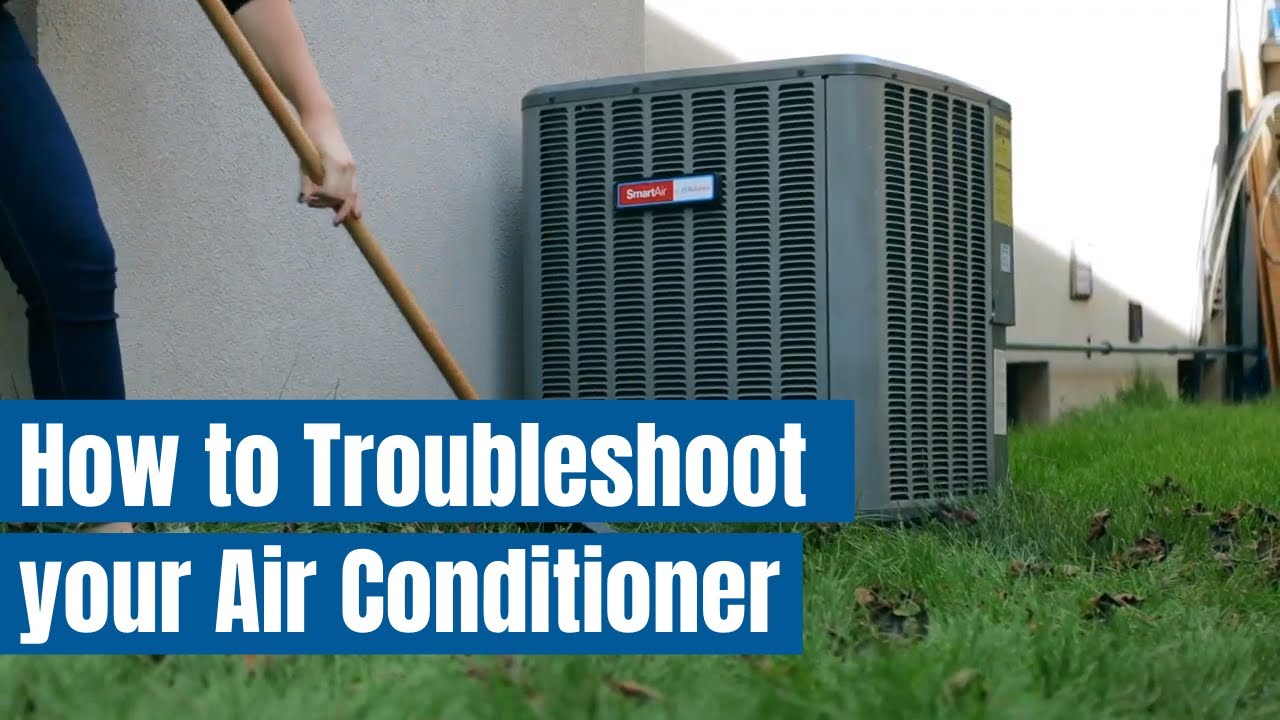
How to troubleshoot your Air Conditioner
More Air Conditioning Tips and Videos
What Our Customers Are Saying about Us In:
Brampton
Erez from Reliance Home Comfort came to our home for a service call this afternoon. His personality, communication skills, technical knowledge, and patience in dealing with our heating and air conditioning issues were excellent. It is not often that I can recommend someone as highly as him and I welcome the opportunity to do so. Thank you very much.
Carlos was very attentive and helpful throughout our process of choosing a new furnace and air condi tioning unit. He was very resourceful with the plans that Reliance has to offer, and checked up after the installation was completed. The Reliance team was also very quick and tidy with the installation. Would recommend.
Reliance responded promptly tony air conditioning concern. Ruel, the technician that performed the s ervice was very professional and courteous. He clearly explained the problem and quickly fixed it. All working great now. Thanks!
Before You Call: Quick Troubleshooting Tips
Before scheduling a service call, there are a few things worth checking. These are common issues that can sometimes be resolved without a technician visit.
Check your thermostat settings
Make sure the thermostat is set to the correct mode (HEAT or COOL depending on the season.)
Check the circuit breaker
Heat pumps have both an indoor and outdoor electrical connection. Check your breaker panel to make sure neither has tripped. If a breaker trips again immediately after resetting, do not reset it a second time. Call a licensed technician.
Check your air filter
A dirty or clogged air filter restricts airflow and can cause the system to underperform, short cycle, or shut down entirely. If the filter is dirty, replace it and see if performance improves.
Check the outdoor unit
Make sure the outdoor unit is clear of leaves, debris, snow or ice buildup. Restricted airflow around the outdoor unit can reduce performance significantly, especially in heating mode.
Is your heat pump in defrost mode?
Heat pumps periodically run a defrost cycle during cold weather to clear ice from the outdoor coil. During this cycle, the system may blow cool air for a few minutes. This is normal.
If none of these steps resolve the issue, call Reliance at 1-888-837-1451. We offer as-soon-as same day repairs, even on holidays.
Why Is My Heat Pump Blowing Cold Air in Heating Mode?
This is one of the most common heat pump concerns, and it is not always a sign of a problem.
It may be normal. Heat pumps do not produce air as hot as a gas furnace. The air coming from your vents during heating mode will feel warm, not hot. If the air is noticeably lukewarm rather than cold, the system may be operating normally. This is called the “windchill effect” where warm air can feel cold when blowing.
Check the thermostat. Make sure the system is set to HEAT, not COOL.
It may be in defrost mode. During cold weather, the system may periodically reverse itself to defrost the outdoor coil. During this cycle (usually a few minutes), the system temporarily blows cool air indoors. This is normal and should resolve on its own.
It could be a reversing valve issue. The reversing valve is the component that switches the heat pump between heating and cooling modes. If it is stuck or failing, the system may remain in cooling mode even when heating is selected. This requires a licensed technician to diagnose and repair.
Low refrigerant. If refrigerant levels are low due to a leak, the system cannot transfer heat effectively. A licensed HVAC technician can test refrigerant levels and repair any leaks.
If the air coming from your vents is consistently cold (not just lukewarm) in heating mode, call a licensed technician for a diagnosis.
Why Is There Ice on My Heat Pump?
Some ice or frost on your outdoor unit during cold weather is normal. But heavy or persistent ice buildup is not, and it can damage your system if left unaddressed.
When frost is normal
A thin layer of frost on the outdoor coil is expected when outdoor temperatures are near or below freezing, especially in humid conditions. Your heat pump’s defrost cycle should clear this automatically as needed. You may notice steam rising from the outdoor unit during defrost. This is normal and not a cause for concern.
When ice is a problem
If the entire outdoor unit is encased in ice, or ice persists for several hours without clearing, there is likely an issue with the defrost system, refrigerant levels, or airflow.
What you can do
- Clear snow, leaves and debris from around the outdoor unit. Maintain at least two feet of clearance on all sides.
- Check your indoor air filter. A clogged filter restricts airflow and can contribute to outdoor coil icing.
- Check your gutters. Water dripping from eaves directly onto the outdoor unit can freeze and create ice buildup that has nothing to do with the heat pump itself.
What you should not do
- Do not chip or scrape ice off the outdoor coil. You can damage the aluminum fins.
- Do not pour hot water on the unit. Rapid temperature change can crack components.
If ice buildup persists after clearing debris and checking the filter, call a licensed HVAC technician at 1-888-837-1451 for a professional diagnosis.
Why Is There Ice on My Heat Pump?
Some ice or frost on your outdoor unit during cold weather is normal. But heavy or persistent ice buildup is not, and it can damage your system if left unaddressed.
When frost is normal: A thin layer of frost on the outdoor coil is expected when outdoor temperatures are near or below freezing, especially in humid conditions. Your heat pump’s defrost cycle should clear this automatically as needed. You may notice steam rising from the outdoor unit during defrost. This is normal and not a cause for concern.
When ice is a problem: If the entire outdoor unit is encased in ice, or ice persists for several hours without clearing, there is likely an issue with the defrost system, refrigerant levels, or airflow.
What you can do:
- Clear snow, leaves and debris from around the outdoor unit. Maintain at least two feet of clearance on all sides.
- Check your indoor air filter. A clogged filter restricts airflow and can contribute to outdoor coil icing.
- Check your gutters. Water dripping from eaves directly onto the outdoor unit can freeze and create ice buildup that has nothing to do with the heat pump itself.
What you should not do:
- Do not chip or scrape ice off the outdoor coil. You can damage the aluminum fins.
- Do not pour hot water on the unit. Rapid temperature change can crack components.
- If ice buildup persists after clearing debris and checking the filter, call a licensed HVAC technician for a professional diagnosis.
Why Does My Heat Pump Smell Strange?
Different smells mean different things, and some require immediate action.
Burning dust smell on first startup of the season This is normal. Dust accumulates on the heating elements and internal components during months of inactivity. When the system starts up, the dust burns off and creates a brief burning smell. This typically fades within 30 to 60 minutes. If it persists beyond a few hours, call a technician.
Burning plastic or electrical smell This is not normal. A sharp, acrid smell like burning plastic or a “fishy” electrical odour could indicate overheating wiring, a failing capacitor, or a scorched relay. Turn off the system at the thermostat and the breaker immediately and call a licensed technician. Do not restart the system until it has been inspected.
Musty or mouldy smell This usually indicates moisture buildup and mould growth on the evaporator coils, in the drip pan, or inside the ductwork. Replace the air filter, check that the condensate drain is not blocked, and schedule a professional cleaning.
Chemical or sweet smell A chemical odour similar to paint thinner or formaldehyde may indicate a refrigerant leak. Turn off the system, ventilate the area, and call a licensed HVAC technician. Do not attempt to locate or repair refrigerant leaks yourself.
My Outdoor Unit Looks Like It Is Smoking. Is That Normal?
Yes, in most cases. What looks like smoke may actually be steam.
During the defrost cycle, your heat pump reverses its operation briefly to melt frost from the outdoor coil. As the ice melts, steam can rise from the unit, which can look alarming, especially on cold mornings. This is completely normal and typically lasts only a few minutes.
When it is not normal: If you see actual smoke (dark or grey), smell burning plastic, or notice the outdoor fan is not spinning, turn off the system and call a licensed technician immediately.
Common Heat Pump Problems and Possible Causes
| Symptom | Possible Cause |
|---|---|
| Heat pump not heating | Thermostat settings, reversing valve, refrigerant levels, compressor issue, air flow restriction |
| Heat pump not cooling | Thermostat settings, reversing valve, refrigerant levels, compressor issue, air flow restriction |
| Heat pump running constantly | Dirty filter, low refrigerant, undersized system, extreme outdoor temperatures |
| Heat pump short cycling (turning on and off frequently) | Mechanical issue, oversized system |
| Unusual noises (grinding, rattling, buzzing) | Loose components, fan motor, compressor wear, debris in outdoor unit |
| Excessive ice buildup on outdoor unit | Defrost system failure, low refrigerant, blocked airflow |
| Heat pump blowing lukewarm air | Normal operation (heat pumps blow warm, not hot air) or reduced refrigerant charge |
| Burning or strange smell | Dust burn-off (normal at startup), electrical fault, mould, or refrigerant leak |
| Outdoor unit steaming | Normal defrost cycle in cold weather |
| Heat pump not switching between heating and cooling | Stuck or failing reversing valve, thermostat issue |
Important: Heat pumps use refrigerant and high-voltage electrical components. Repairs should only be performed by a licensed HVAC professional.
Should You Repair or Replace Your Heat Pump?
If your heat pump is older or requires frequent repairs, it may be more cost-effective to replace it. Here are some general guidelines to help you decide:
- Your heat pump is 15 years old or more
- Repair costs are approaching 50% of the cost of a new system
- You are calling for repairs more than once a year
- If you are unsure, a licensed technician can assess your system during the service call and help you weigh both options.
FAQs
The cost of a heat pump repair depends on the issue. Minor repairs such as a capacitor or thermostat replacement are typically less expensive, while major repairs involving the compressor or reversing valve cost more. A Reliance technician will provide a clear diagnosis and quote before any work begins.
Yes. Reliance services all brands, makes and models of heat pumps, regardless of where you purchased or had it installed.
If your heat pump is over 15 years old, requires frequent repairs, or repair costs are approaching half the cost of a new system, replacement may be the more cost-effective option. A Reliance technician can help you evaluate both options during your service call.
The right size depends on your home’s heating and cooling load, which is determined by a proper load calculation, not square footage alone. A Reliance Home Comfort Advisor will assess your home during your free consultation.
Yes. Heat pumps may qualify for provincial and federal rebates. In Ontario, the Home Renovation Savings Program offers up to $7,500 for cold climate air source heat pumps for example. Your Reliance Home Comfort Advisor can help identify which programs apply to your installation.
This could be caused by incorrect thermostat settings, a defrost cycle in progress, a stuck reversing valve, or low refrigerant. Heat pumps also blow warm air rather than hot air, which can feel cool compared to a gas furnace. Check your thermostat first. If the issue persists, call Reliance for a professional diagnosis.
A thin layer of frost during cold weather is normal and should clear during the automatic defrost cycle. If ice is thick, covers the entire unit, or persists for several hours, there may be a problem with the defrost system, refrigerant levels, or airflow. Call on Reliance™ for an inspection.
A brief burning smell on the first startup of the season is usually harmless dust burning off the heating elements. If the smell persists, smells like burning plastic, or is accompanied by smoke, turn off the system immediately and call a licensed technician.
Yes. Reliance offers as-soon-as same day repairs, even on holidays. Call 1-888-837-1451 for assistance.
What looks like smoke is usually steam from the defrost cycle. During cold weather, the system periodically melts frost from the outdoor coil, releasing steam. This is normal. If you see dark smoke or smell burning, turn off the system and call Reliance.
Featured AC Resources

The 2026 Ultimate Air Conditioning Guide

Frequently Asked Questions about Air Conditioners

Air Conditioner Buying Guide for Canadian Homes

13 Ways to Save on Cooling Costs
More AC Resources
The 2026 Canadian Guide to Ductless Heat Pumps: Costs, Rebates & Performance
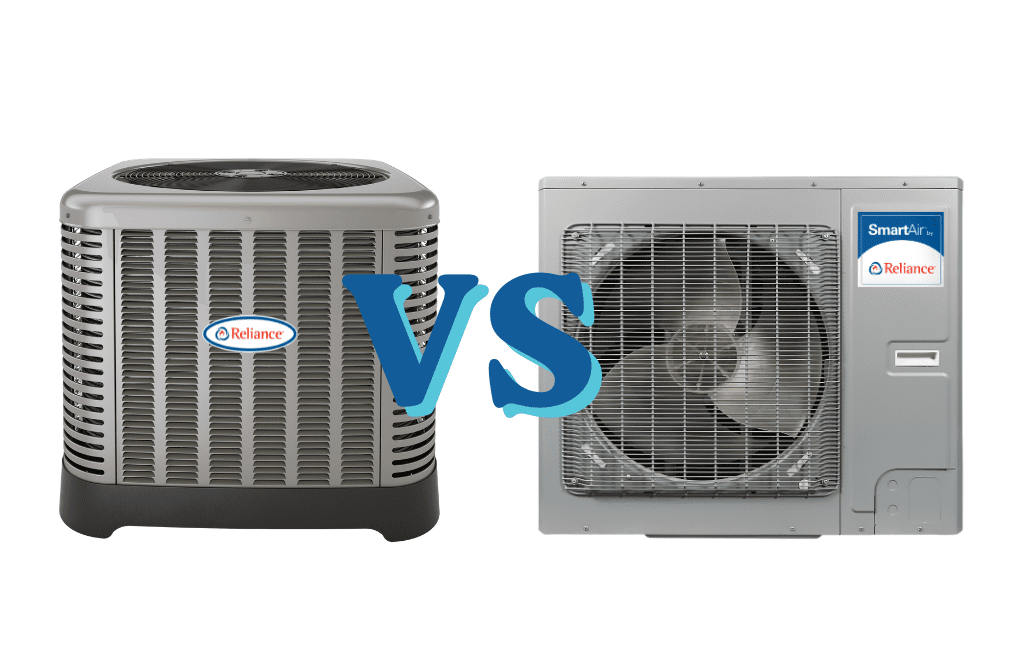
Central AC vs. Heat Pump in Canada: Differences, Costs, and How to Choose (2026)
How Much Does a Home Air Conditioner Cost in Canada?