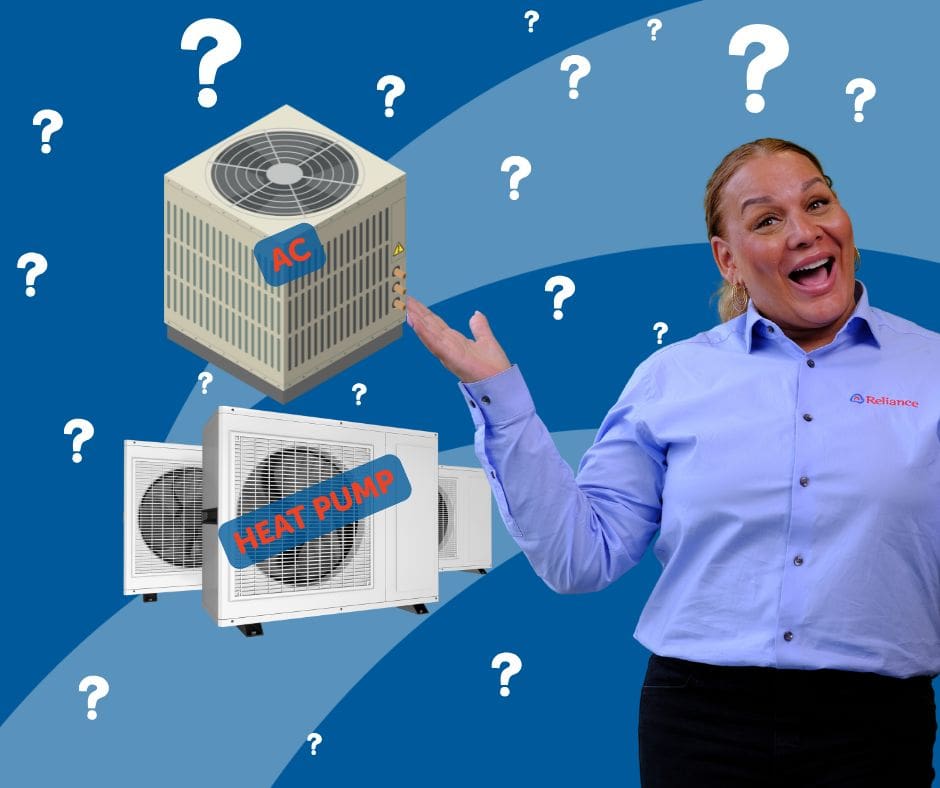


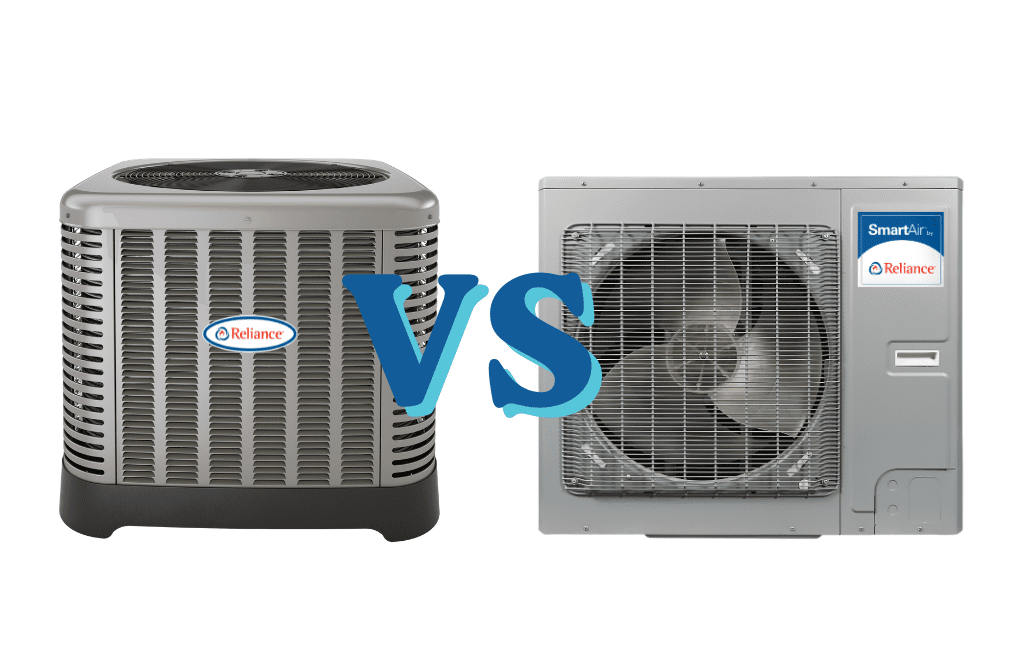
The key difference: A central air conditioner only cools your home. A heat pump cools in summer and heats in winter using the same system, making it a dual-purpose upgrade. In 2026, the price gap between the two has narrowed significantly in Canada, making heat pumps the standard recommendation for homeowners looking to future-proof.
For most Canadian homeowners in 2026, the price gap between a central air conditioner and a heat pump has diminished significantly. While a standard AC costs between $3,899 and $14,299, a central heat pump starts as low as $6,599. This is based on Reliance pricing and includes installation.
The “Price Gap” Myth: Is a Heat Pump Actually More Expensive?
In the past, heat pumps were considered a luxury upgrade. In 2026, the economics have changed across Canada:
-
- •AC Prices are Rising: Manufacturing and regulatory shifts have pushed traditional AC costs up.
- •Heat Pump Volume is Up: High demand has brought more inventory into Canada, driving equipment costs down.
- •The “Two-for-One” Value: When you buy a heat pump, you aren’t just buying an air conditioner; you are buying your primary heating source for up to 80% of the year.
- •Extra Heat Pump Savings with Rebates:
With rebates changing all the time from province to province, it is important to check our rebates page for the latest updates. Our team members are knowledgeable on all your local rebates and will be able to walk you through your eligibility and the process. -
Reliance AC VS Heat Pump Cost Table
| System Size | Central AC Price Range | Heat Pump Price Range |
|---|---|---|
| 1.5 Ton | $3,899 – $9,199 | $7,749 – $15,499 |
| 2.0 Ton | $3,899 – $13,099 | $6,599 – $16,299 |
| 2.5 Ton | $3,999 – $13,699 | $6,999 – $17,099 |
| 3.0 Ton | $4,199 – $13,499 | $7,399 – $17,899 |
| 4.0 Ton | $4,399 – $13,899 | $8,199 – $19,499 |
| 5.0 Ton | $5,549 – $14,299 | $8,599 – $20,299 |
Key Insight: In several system sizes, heat pumps and central air conditioners fall within a similar price range. When the difference is marginal, choosing a heat pump gives you cooling plus efficient heating from the same system, turning a cooling upgrade into a year-round comfort investment.
Solutions for Homes Without Ductwork (Mini-Splits)
If your home uses baseboard heaters or radiators, you don’t need to install expensive ductwork to get these benefits. Ductless Mini-Split Heat Pumps are the most popular alternative in Canada for targeted comfort.
- •Single-Zone Systems: $6,000 – $7,500+. Perfect for cooling a main floor or a new home extension.
- •Multi-Zone Systems: $8,500 – $22,000+. Uses one outdoor unit to power multiple indoor heads.
Why the “Dual-Purpose” Nature is the Real Game Changer
A heat pump isn’t just an alternative to an AC; it’s an upgrade to your entire home’s climate strategy.
- •Dehumidification: Modern heat pumps use variable-speed inverter technology, making them more effective at pulling humidity out of the air during Canadian summers.
- •Spring & Fall Savings: A heat pump can efficiently handle your heating needs for about 80% of the year.
- •Quiet Performance: Many units are engineered for whisper-quiet operation compared to traditional AC units.
Which System is Right for Your Home?
Choose a Central AC if:
- •Immediate Budget is the Only Factor
- •Short-Term Housing (moving in the next 12–24 months)
- •You recently installed a Brand New Furnace
Choose a Central Heat Pump if:
- •You Want Lower Monthly Gas Bills
- •You Value Humidity Control
- •You Want to Future-Proof
Trusted Manufacturers
We recommend established brands like Rheem, Trane, Carrier, Goodman, Daikin, Gree, Hisense, and Mitsubishi. These manufacturers offer systems capable of handling temperatures as low as -25°C to -35°C.
The Bottom Line
If you are comparing air conditioners in the mid-range pricing tier, it is worth asking for a quote on a similarly priced heat pump. For a marginal increase, a heat pump delivers a year-round climate solution that adds more overall value to your home.
Frequently Asked Questions
How much does a central heat pump cost in Canada?
In 2026, Reliance central heat pump prices typically start as low as $6,599. Prices vary by system size, ranging from approximately $7,749 for a 1.5-ton unit to over $20,299 for a 5.0-ton system.
Can a heat pump replace both my furnace and air conditioner?
Yes. A heat pump is a dual-purpose system that provides both cooling in the summer and efficient heating in spring and fall. Cold climate heat pumps will work down to -25°C to -35°C. but will lose efficiency the colder it gets. Unless you live in a moderate climate like Vancouver, we recommend having a backup heat source like a gas furnace for those really cold days. This dual fuel system will also give you the flexibility to choose gas or electricity in winter depending on cost.
What if my home doesn’t have existing ductwork?
Homeowners without ductwork can use Ductless Mini-Split Heat Pumps. Single-zone systems typically range from $6,000 to $7,500+, while multi-zone systems for the whole home can range from $8,500 to over $22,000.
Are heat pumps effective in extreme Canadian winters?
Modern cold-climate heat pumps from trusted manufacturers are engineered to handle extreme temperatures as low as -25°C to -35°C.
Summary: Choosing the Right System
In 2026, the cost difference between a central AC and a heat pump is smaller than ever. While a standard AC is a reliable cooling-only option, a central heat pump provides year-round comfort by handling both cooling and efficient heating for the majority of the year.
*Pricing is quoted from Reliance pricing
Related Resources
Check out our latest Heat Pumps offers here!
See Latest OffersRelated Articles