


Enhance Your Drinking Water with a Reverse Osmosis Filtration System
Looking for a simple and cost-effective way to improve your home’s water quality? A reverse osmosis (RO) filtration system from Reliance® offers a convenient solution for purified, great-tasting water. Designed for easy installation at key water sources like your kitchen sink, our advanced multi-stage filtration process helps reduce common water impurities so you can enjoy crisp, refreshing water for drinking and cooking.
How Reverse Osmosis Filtration Works
Our four-stage RO water filtration system is engineered to help enhance water clarity and taste by targeting a range of potential impurities:
- Sediment Filter: Captures particles and sediment as small as 5 microns
- Reverse Osmosis Membrane: Reduces dissolved substances
- Carbon Filter: Helps remove chlorine and other elements that may affect taste and odour
- Polishing Carbon Filter: Further refines water for a clean, fresh taste
Why Choose a Reverse Osmosis Water Filter?
- Helps reduce sediments, minerals, and chemicals that can affect water clarity and flavour
- Easy filter replacements help keep your system performing optimally
- Free replacement filters with your rental, conveniently shipped to your door*
Traditional Reverse Osmosis Systems
A traditional reverse osmosis system uses a dedicated storage tank to hold purified water until you need it. Water is filtered through the RO system and stored in the tank, allowing it to be dispensed quickly from a separate drinking water faucet. These systems have been a trusted choice for homeowners for many years and can provide a consistent supply of purified water for drinking and cooking.
Benefits of a Traditional RO System:
- Stores filtered water in a dedicated tank for convenient access when you need it
- Proven, reliable technology used in homes for decades
- Delivers purified water through a dedicated drinking water faucet
- Can be a practical option when under-sink space allows for a storage tank
Choose Between Tank and Tankless Reverse Osmosis Systems
A tankless reverse osmosis system is a modern upgrade to traditional under-sink water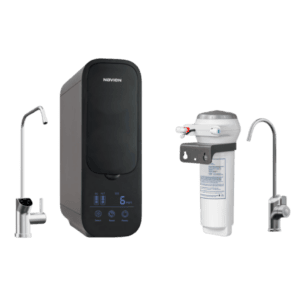 purification systems. With no bulky storage tank, it delivers high-quality filtered water directly from the tap, efficiently and instantly.
Here’s How a Tankless Reverse Osmosis System Works
Advanced Pre-Filtration: Water first flows through a set of precision-engineered filters to remove sediment, rust, chlorine, and other large impurities that affect taste and clarity.
Reverse Osmosis Membrane: At the heart of the system, a high-efficiency RO membrane filters out impurities such as select microscopic impurities, heavy metals, PFAS and nitrates.
Tankless Flow Technology: Unlike traditional systems, this unit doesn’t store water in a tank. Instead, it purifies water in real time as you use it, reducing stagnation and maximizing freshness.
Smart Monitoring (select models): Some models feature smart technology that tracks filter life and system performance, alerting you when it’s time for maintenance or replacement.
Overall, this system is designed to deliver consistent, purified water with a minimal footprint and maximum convenience.
Frequently Asked Questions
How is a tankless reverse osmosis system different from a traditional RO system?
Traditional RO systems use a storage tank to hold filtered water, while tankless systems purify water on demand. This means no stored water sitting in a tank and often a sleeker, more compact design that saves space under your sink.
Do reverse osmosis systems produce wastewater?
Yes. All reverse osmosis systems produce wastewater as part of the filtration process.
How often do I need to change the filters?
Typically, pre-filters should be changed every 6–12 months, and the RO membrane every 2–3 years, depending on water quality and usage. If you’re renting from Reliance, we deliver replacement filters annually for your convenience.
Homeowner Requirements for a Tankless Reverse Osmosis System
- Under-Sink Space: While tankless systems save space by eliminating the storage tank, they still require room for the filtration unit and plumbing connections. A quick under-sink measurement is recommended.
- Power Supply: Most tankless RO systems require access to a standard electrical outlet (usually 110V) to power the internal pump and filtration technology. If one isn’t available under the sink, an outlet will need to be installed.
- Water Pressure: Optimal incoming water pressure is usually between 40–100 psi. If your home has low water pressure, a booster pump might be required (some tankless systems include one built-in).
- Drain Connection: The system needs to be connected to a drain line to dispose of the wastewater produced during the filtration process. A nearby drain under the sink is essential.
- Cold Water Line Access: The system will connect directly to your home’s cold water line, so accessible plumbing is needed.
Get Purified, Fresh-Tasting Water Today
Interested in upgrading to a reverse osmosis system? Book an in-home consultation with our water experts to explore the best filtration solution for your home.
Explore More Water Filtration Options
How to Replace Your RO Filters
When you rent a reverse osmosis system from Reliance, we ship replacement filters straight to your door every year. Changing them is simple, takes about 15 to 20 minutes, and requires no special tools. Our step-by-step guide walks you through the entire process, from turning off the water supply to flushing your system after installation.
Learn how to replace your RO filters
📺 Watch this video to see how an RO system works and why it may be the right choice for you.

Better tasting water has never been so easy! Book your free in-home water test today!
**Existing Reliance rental or protection plan customers are entitled to a $5 rate discount for so long as they maintain their existing rental or protection plan service at the same residence.