


When your air conditioner stops working in the heat of a Canadian summer, you need answers fast. While some issues require a licensed technician, others can be resolved with a few simple checks. Use this guide to identify the signs, sounds, and smells coming from your central or ductless cooling system.
Quick Diagnosis: AC Symptom Checker
| Symptom | First Step |
|---|---|
| No cold air | Check your air filter and thermostat settings first. |
| Strange noises | Banging or hissing requires an immediate system shutdown. |
| Water leaking or ice buildup | Turn off the unit to prevent damage to your furnace’s electronics. |
| Burning smell | Flip the breaker and call for emergency repair. |
1. My AC Is Running but Not Blowing Cold Air
This is one of the most common cooling issues with both central and ductless systems. If the air is moving but feels room temperature, the system is struggling to remove heat.
A dirty air filter could be to blame. When airflow is restricted, the system can’t cycle enough air to cool your home.
The Check: Inspect your furnace filter (or the filter on your ductless indoor unit). If it’s grey or covered in dust, replace or clean it.
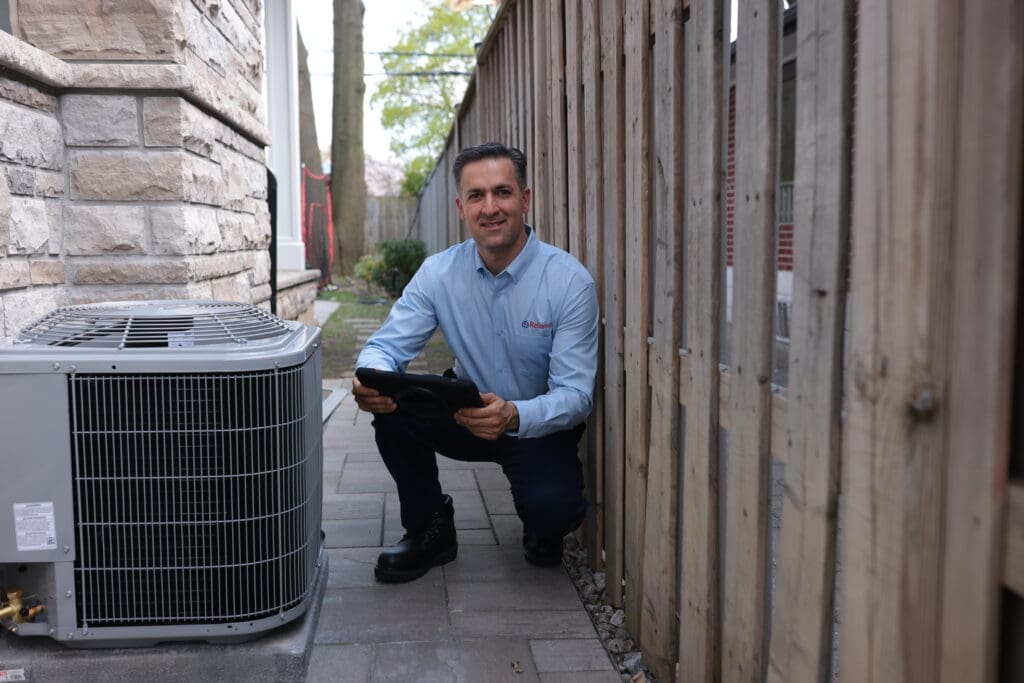
Technical Tip: Ensure your outdoor condenser has at least two feet of clearance. Grass, weeds, or fences blocking the unit can cause it to not cool effectively.
What this repair typically involves: If a filter swap doesn’t solve it, the issue is usually related to the capacitor, compressor, or refrigerant levels. See common AC repair costs.
2. There Is Ice on My Indoor AC Unit
It seems counterintuitive, but your air conditioner can freeze even when it’s 30°C outside. This can happen with central air conditioners and ductless mini-split systems alike.
Common Cause
Low refrigerant levels or restricted airflow can cause the indoor evaporator coil to become too cold. When this happens, moisture in the air condenses on the coil and freezes into ice. Dirty filters, blocked vents, or duct issues can also contribute.
Immediate Action
Turn the AC off at the thermostat. This helps the ice melt safely. Do not try to scrape the ice off, as the fins and coils are easily damaged. A technician should inspect the system before cooling is turned back on.
What this repair typically involves: A technician will check refrigerant levels and inspect the evaporator coil. See common our air conditioner repair page for more info.
3. My AC Is Making a Strange Noise
Identifying the specific sound can help determine if you have a minor mechanical issue or a major system failure. These sounds can come from central units, ductless mini-splits, or the outdoor condenser.
Banging or Clanking: Usually indicates a loose or broken part inside the unit. Shut down the system immediately.
Squealing: Often caused by a worn-out fan or motor that needs repair.
What this repair typically involves: Noise-related repairs often involve the blower motor or fan assembly. See common AC repair costs.
4. I Smell Something Burning from the Vents
A burning odour should never be ignored, as it often involves the electrical components of your HVAC system.
The Cause: It could be a failing blower motor, a shorted-out capacitor, or electrical wiring issues.
The Action: Turn the system off at your main electrical panel (the breaker) and book an emergency repair visit.
What this repair typically involves: Electrical repairs such as a capacitor or blower motor replacement. See common AC repair costs.
Repair vs. Replace: How to Decide
Not every breakdown means you need a new system. Use these factors to weigh the cost of a repair against the long-term savings of a replacement.
| Factor | Consider Repair | Consider Replacement |
|---|---|---|
| System age | Under 10 years | 15 years or older |
| Repair cost | Less than 50% of a new system | More than 50% of a new system |
| Efficiency (SEER2) | Rated 13.4 or higher | Below current minimum standards |
| Refrigerant type | R-410A (Puron) | R-22 (no longer produced in Canada) |
| Repair frequency | First major repair | Multiple repairs in the past 2 years |
SEER2 (Seasonal Energy Efficiency Ratio) measures how much cooling your system provides per dollar of electricity. Modern units have a SEER2 rating of 13.4 or higher. Older units may rate well below that, meaning higher monthly utility costs. If you’re leaning toward replacement, start with a proper load calculation.
Refrigerant: Most currently installed systems use R-410A. If your system still uses R-22, it can no longer be recharged with new refrigerant in Canada, making replacement the more practical long-term option.
A Reliance technician can walk you through your options and help you compare the cost of a repair against a new system.
What to Expect When You Book a Repair
We know that waiting for a repair is stressful. When you Call on Reliance™, we prioritize transparency and speed:
Arrival Windows: We provide 4-hour windows so you aren’t waiting all day.
Technician Updates: You’ll receive a call or text when your technician is 30 minutes away.
Flat-Rate Quotes: Our technicians provide a fixed-price quote for the repair before the work starts. No hidden fees or hourly surprises. And we won’t charge a diagnostic fee if you go ahead with the repair. Renting? Most repairs are already included.
Expert Standards: Our licensed technicians perform a full diagnostic to identify the root cause before recommending a repair.
Is your AC still not working? Don’t suffer in the heat. Book Your AC Repair Online for as-soon-as same-day service, or call 1-888-837-1451 for 24/7 live phone support, 365 days a year.

Check out our latest Air Conditioners offers here!
See Latest OffersRelated Articles