


What Vancouver’s 2027 and BC’s 2030 Water Heater Changes Mean for Your Home
If you live in the City of Vancouver, new residential water heater requirements will come into effect January 1, 2027. When a water heater in an eligible house or duplex needs replacing, homeowners will generally need to choose a higher-efficiency option, such as a standard electric or heat pump water heater. You do not need to replace a water heater that is still working.
If you live elsewhere in the Lower Mainland, Vancouver’s 2027 requirement does not apply to your home. However, B.C. is proposing province-wide standards for 2030 that would require newly sold and installed water-heating equipment to meet a higher efficiency standard. Under the current proposal, standard electric and heat pump water heaters would qualify, along with certain other advanced systems.
Reliance Home Comfort® has been helping homeowners explore greener home comfort solutions for years. Whether you live in Vancouver, Burnaby, Surrey, Richmond, Langley, Abbotsford or elsewhere in our Lower Mainland service area, we are here to explain what is changing and help you find a water heater that works for your home.
Book a Free In-Home Consultation
What is changing and when?
January 1, 2027: City of Vancouver
The City of Vancouver is scheduled to introduce new requirements for new water heaters replacing old equipment in certain houses and duplexes.
The change does not mean every homeowner needs to replace their water heater in 2027. It matters when an existing water heater needs to be replaced.
Reliance has options available when it is time for a replacement, based on the requirements that apply to your home. These include:
- Electric water heaters
- Heat pump water heaters
The City of Vancouver requirement does not automatically apply to surrounding municipalities.
January 1, 2030: Province of British Columbia
B.C. has proposed province-wide standards for new space- and water-heating equipment sold and installed beginning January 1, 2030. The Province describes this as a move toward high-efficiency, lower-carbon equipment. The proposal applies to domestic storage and tankless water heaters, as well as some space-heating equipment.
Under the current proposal, the following types of equipment could meet the standard:
- Standard electric water heaters
- Heat pump water heaters
- Certain gas heat pump systems
- Certain dual-fuel or hybrid systems
This is not a proposal to make heat pump water heaters mandatory. Standard electric water heaters would continue to be permitted because they convert the electricity they use directly into heat. Heat pump models go further by moving heat from the surrounding air into the tank.
Because the provincial requirements are still being developed, their final details could change before 2030.
What does this mean for your home?
If you live in the City of Vancouver
The 2027 requirement may affect your replacement if:
- You live in an eligible house or duplex
- Your water heater needs replacing on or after January 1, 2027
- Your home is not covered by an available exception
Again, this is for replacements only. You do not need to remove a functioning water heater before the requirement begins.
If you live elsewhere in the Lower Mainland
Vancouver’s 2027 requirement does not automatically apply to homes in neighbouring municipalities.
However, the proposed 2030 B.C. standards are intended to apply across the province. If you are replacing your water heater before then, you can still consider an electric or heat pump water heater now rather than waiting for the provincial change.
This applies to homeowners in Reliance service areas including:
- Abbotsford
- Burnaby
- Chilliwack
- Coquitlam
- Delta
- Langley
- Maple Ridge
- Mission
- New Westminster
- North Vancouver
- Pitt Meadows
- Port Coquitlam
- Port Moody
- Richmond
- Surrey
- Tsawwassen
- Vancouver
- West Vancouver
- White Rock
If your water heater is working properly
You do not need to replace it early simply because requirements are changing.
Planning ahead can make replacement easier
A water heater often receives little attention until there is no hot water or water is collecting around the tank. At that point, there is less time to compare products, assess the home’s electrical setup or determine whether a heat pump model will work in the available space.
Planning ahead can help you understand:
- Which changes apply in your municipality
- Whether your current electrical panel can support an electric water heater
- Whether the installation area is suitable for a heat pump model
- What may be involved in switching from gas
- Which tank size and recovery rate meet your household’s needs
- Whether rebates are available
- What permits or inspections may be required
Reliance can look at the entire installation and explain the options in everyday language.
Book a Water Heater Assessment
Choose a water heater that fits your home
Changing requirements do not make one product right for every household.
A standard electric water heater may be the more practical option in a smaller utility area. A heat pump water heater may be a great fit in a larger basement or service room with the right airflow and drainage.
The recommendation should be based on your home, not simply the regulation.
Standard electric water heater
A straightforward electric option
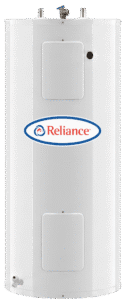
A standard electric water heater uses electric elements inside an insulated tank to heat and store water. It does not burn fuel and does not require the same combustion venting as a conventional gas water heater.
It can be a practical choice when you want a familiar tank system or your installation area is not suitable for a heat pump model.
It may be a good fit if:
- Your utility area has limited space
- There is not enough airflow for a heat pump model
- There is no practical condensate drain nearby
- Quiet operation is especially important
- You want a simpler electric storage system
- Your home has the required electrical capacity
Explore Standard Electric Water Heaters
Heat pump water heater
A greener way to heat your water
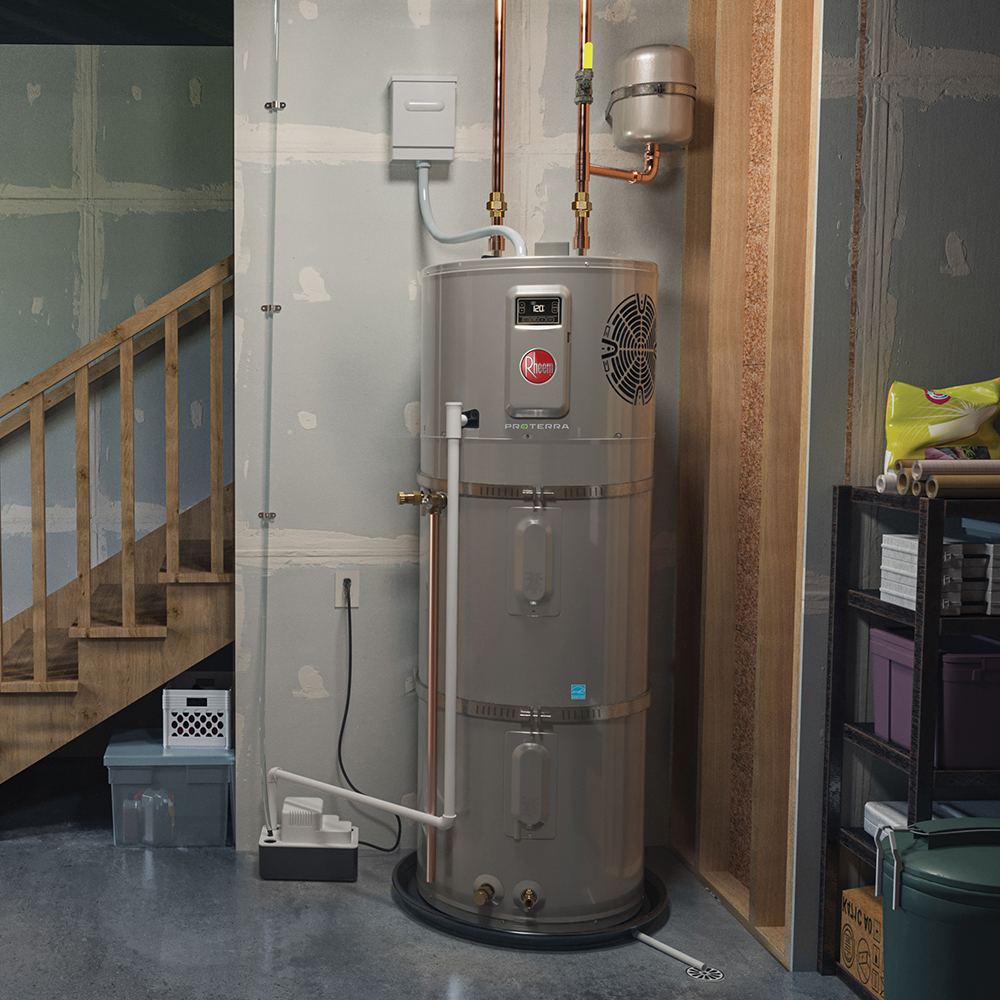
A heat pump water heater uses electricity to move heat from the surrounding air into the water stored in its tank. Because it moves existing heat rather than creating all its heat directly, it can use less electricity for water heating than a standard electric model.
It needs the right installation conditions, including sufficient space and airflow and a suitable way to drain condensation.
It may be a good fit if:
- You have a suitable basement or utility room
- The installation area has enough space and airflow
- Condensation can be drained properly
- You want to reduce the electricity used to heat water
- Cooling and dehumidification of the space is acceptable
- Fan and compressor sound will not be disruptive
- Your home may qualify for a current rebate
Featured product: Rheem ProTerra
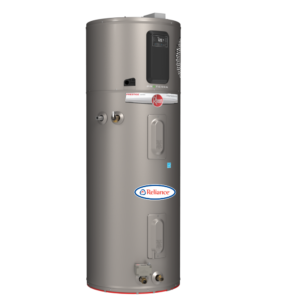
The Rheem ProTerra uses heat pump technology to draw heat from the surrounding air and transfer it into the water in the tank. Available models, tank sizes and installation options should be confirmed during the consultation.
Explore Heat Pump Water Heaters
Which requirement applies where?
| Where you live | What homeowners should know |
|---|---|
| City of Vancouver | The 2027 residential replacement requirement may apply to eligible houses and duplexes. |
| Burnaby, Richmond, Surrey and other Lower Mainland municipalities | Vancouver’s 2027 requirement does not automatically apply. Follow the requirements in your municipality. |
| Anywhere in British Columbia | The Province is proposing new standards for equipment sold and installed beginning January 1, 2030. |
Here to help as home comfort changes
We know that changing requirements can be confusing, especially when one rule applies to Vancouver and another is being planned for the rest of B.C.
You do not need to become an expert in municipal requirements, electrical systems or water-heating technology before asking for help.
Reliance has been helping Canadian homeowners with home comfort for more than 60 years. We have also been helping customers explore greener solutions, including heat pumps and heat pump water heaters, based on what works for their home.
We look at more than the tank
We consider the current equipment, household hot-water use, installation area and electrical setup.
We make the options easier to understand
We explain the practical differences between standard electric and heat pump water heaters, including space, sound, drainage and electricity use.
We help you plan for changing requirements
We can discuss the options available today while keeping Vancouver’s 2027 requirement and B.C.’s proposed 2030 standards in mind.
We are here when you need us
Reliance offers 24/7/365 live phone support. We can help you understand the next step if your current water heater is aging, leaking or no longer providing enough hot water.
Book a Free In-Home Consultation
Frequently asked questions
Are water heater requirements changing across B.C.?
Yes. Beginning January 1, 2030, B.C. has proposed new province-wide efficiency standards for sold and installed space- and water-heating equipment.
The current proposal would allow standard electric water heaters, heat pump water heaters and certain advanced gas or hybrid systems. The final requirements may change before they take effect.
Is the B.C. 2030 proposal the same as Vancouver’s 2027 requirement?
No. They are separate changes.
Vancouver’s requirement is a municipal rule scheduled to affect certain residential water heater replacements beginning January 1, 2027.
The proposed B.C. standards are intended to apply province-wide to newly sold and installed space- and water-heating equipment beginning January 1, 2030.
Will B.C. require everyone to install a heat pump water heater in 2030?
Not under the current proposal. Standard electric water heaters would meet the proposed provincial standard, as would heat pump water heaters and certain qualifying gas heat pump and hybrid systems.
Do I need to replace my water heater before 2030?
No. The provincial proposal applies only to equipment sold and installed once the standards take effect. It does not say that every homeowner must replace a functioning water heater by 2030.
Should I wait until 2030 to replace my water heater?
No, not if your current water heater needs replacing.
A properly selected standard electric or heat pump water heater can already align with the types of equipment included in B.C.’s current proposal. The right choice still depends on your home’s electrical capacity, installation space, drainage and hot-water needs.
Does Vancouver’s 2027 requirement apply in Burnaby or Surrey?
No. Vancouver’s municipal requirement does not automatically apply in Burnaby, Surrey or other Lower Mainland communities.
Homeowners outside Vancouver should follow local requirements while also being aware of B.C.’s proposed province-wide standards for 2030.
Check out our latest Water Heaters offers here!
See Latest OffersRelated Articles

