


You’re wearing your coziest thick socks, your scarf is tightly wrapped around your neck and shoulders, and there’s an unmistakable chill in the air.
Unfortunately, you aren’t outside but standing in your home, shivering because your furnace has stopped working! The question is, what should you do next? The first thing that may come to mind when you have a broken furnace on your hands is to call the professionals in to fix it – and that’s never a bad idea. But did you know that there are a few things you might want to consider before you make that furnace repair call? Understanding when to diagnose simple issues yourself versus when emergency service is needed could help save you time and money while helping ensure your family’s safety and comfort.
Why is my furnace not producing heat?
If your furnace is not producing heat, there are several potential causes. These include but are not limited to a broken thermostat, the thermostat being set too low, an extinguished pilot light, a blown fuse or tripped circuit breaker, a closed gas valve, or issues with the electronic ignition. A malfunctioning flame sensor or faulty burner can also prevent your heating system from operating efficiently. Before contacting a professional, there are some things you can check yourself to determine if the issue can be resolved quickly on your own. However, if you smell gas or suspect carbon monoxide is present, evacuate immediately and call emergency services – this is a dangerous situation that requires immediate professional attention.
Why isn’t my furnace turning on?
If your furnace isn’t turning on, the first thing you should do is check whether the filter is clean. Dirty filters can restrict airflow, causing the furnace to fail. Additionally, make sure your thermostat settings are correct. A quick check of these elements may help you avoid an unnecessary service call. We offer soon as same day service for urgent heating issues, free diagnostic if you proceed with the repair and upfront pricing so you know the cost before the work begins.
4 Common Furnace Issues and How to Troubleshoot
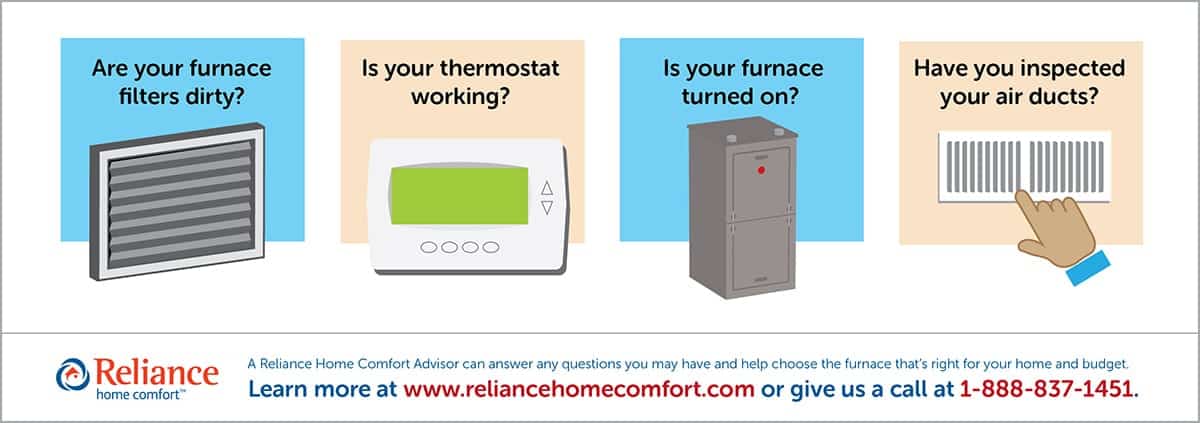
When your furnace stops working, it’s important to stay calm and check a few common issues before calling a technician. Taking a safety-first approach helps you diagnose the problem while helping protect your home from potential carbon monoxide risks or other dangerous conditions. Here are four possible causes, along with troubleshooting tips to help you get your furnace back up and running.
1. Dirty Furnace Filters
Is your furnace firing up but not blowing heat as hard as usual? Dirty air filters are a frequent cause of furnace inefficiency. These filters trap dust, dirt, and debris, which can build up and restrict airflow. This blockage can cause the heat exchanger to overheat and the furnace to stop functioning properly. Clogged filters also reduce energy efficiency, potentially leading to higher utility bills and placing unnecessary strain on your heating system.
Filters should be changed every three months or as recommended by the manufacturer. Regular filter replacement is part of affordable preventive maintenance that may extend the lifespan of your furnace and improve indoor air quality. Watch our video on how to change your furnace filter for a step-by-step guide.
2. Thermostat Issues
Sometimes the issue isn’t with the furnace itself but with the thermostat that controls it. If your furnace isn’t working, check that the thermostat is set to heat and that the temperature is set at least 5 degrees higher than the current room temperature.
If the display is blank, the batteries may be dead, which prevents the thermostat from operating your system. Replace the batteries annually to avoid this issue in the future. If your thermostat continues to malfunction after replacing batteries, a certified technician can test and calibrate it, or help you upgrade to a more reliable programmable model that offers better temperature control and energy savings.
3. Is the Furnace Turned On?
It may seem obvious, but check to ensure that the furnace’s power switch is turned on. After repairs or maintenance, the switch may have been turned off. You’ll typically find this switch near the furnace.
Also, verify that the circuit breaker hasn’t been tripped and that the furnace’s front panel is securely fastened. The furnace won’t turn on unless the switch under the blower motor panel is fully depressed. This safety switch is designed to protect you from dangerous electrical hazards when the panel is removed.
4. Inspect Air Ducts
If some areas of your home are colder than others, there may be an issue with your air ducts. Check for dampers on the ducts to ensure they are fully open, allowing for proper airflow. Blocked vents and registers can also restrict heating capacity, preventing warm air from reaching certain rooms.
If whole rooms remain cold, there could be leaks or blockages in the ducts. Inspect accessible ductwork for gaps between sections and seal them with metal duct tape. For more extensive issues, contact a professional for duct cleaning and repair.
If your furnace still isn’t turning on after checking these, you should call in a professional to inspect the system. When deciding whether to repair or replace your furnace, consider the furnace age, repair costs versus a new system, and whether warranty coverage applies to your current unit.
Schedule an appointment
Our Reliance® technicians are licensed, certified, and experienced professionals with years of experience servicing all major furnace models ready to assist you and provide peace of mind. We offer 24/7/365 phone support, upfront pricing with no hidden fees, and warranty coverage on both parts and labour. We offer soon as same-day service, and we stand behind our work with satisfaction guaranteed. Contact us for an estimate and ask about our affordable maintenance plans and financing options.


Check out our latest Furnace offers here!
See Latest OffersRelated Articles