

Quick answer: Sparks, crackling sounds, burning smells, warm outlets, or signs of discolouration on outlet covers should be treated as urgent. Turn off the breaker for that circuit and call a licensed electrical contractor. Breakers that trip often may indicate that a circuit is overloaded. It is not always an emergency, but you should have the system checked. Do not keep resetting a breaker that trips instantly or attempt electrical work unless you are legally permitted and qualified to do so.
Your House Is Trying to Tell You Something
Homes have a way of dropping hints before something goes wrong. A warm outlet. A breaker that trips a little too often. These are often small warnings that give you time to address the problem safely. Sometimes they are more serious.
The tricky part is knowing which is which. This guide walks through seven electrical issues our licensed electricians get called for most often across Ontario, Manitoba, Saskatchewan, Alberta, and British Columbia. For each one, we cover what may be going on, what we often find once we inspect the outlet or panel, what you can safely check yourself, and when to pick up the phone.
A quick note before we start: every province has its own electrical safety and inspection requirements. If you are unsure whether electrical work requires a permit or a licensed electrical contractor, check with your provincial or local electrical safety authority before proceeding.
1. Sparks From an Outlet
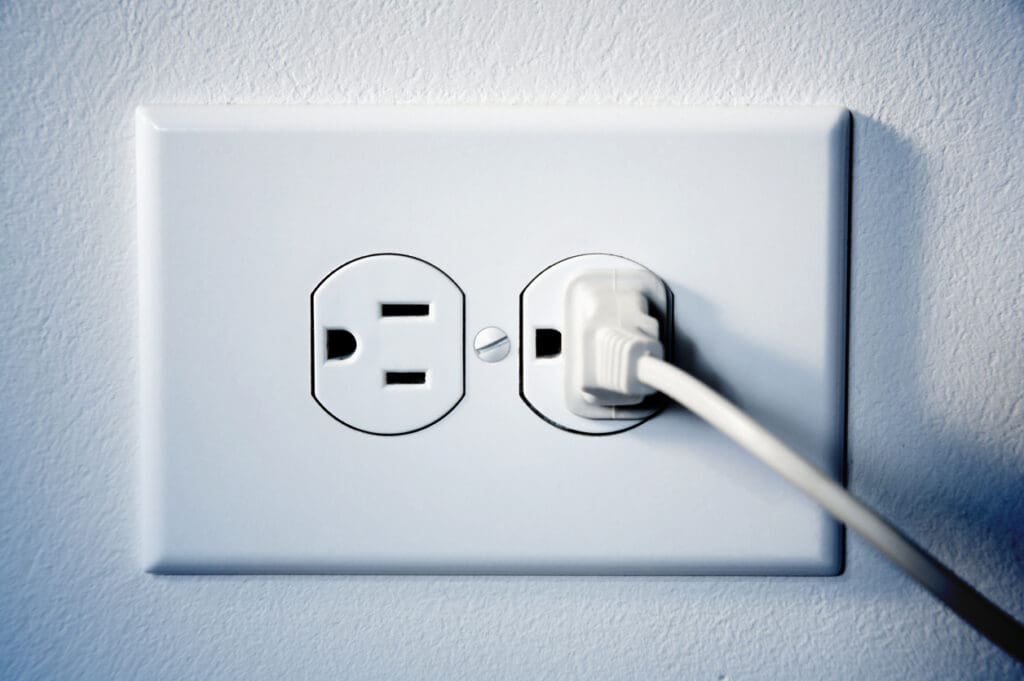
Short answer: A small, brief spark can sometimes appear when you plug in an appliance that immediately draws power. However, a spark that lingers, makes a snapping or hissing sound, comes from an outlet you have not touched, or is accompanied by a burning smell is not normal. Stop using the outlet, turn off the breaker for that circuit, and call a licensed electrical contractor.
The Kind of Spark That May Be Normal
When you plug in something with a higher initial power draw, such as a vacuum, hair dryer, or space heater, you might see a small, brief flash as the plug makes contact. This can happen when electricity crosses the final small gap before the plug is fully seated.
The Kind of Spark That Is Not Normal
- A spark that lingers or happens repeatedly. This may indicate a loose connection or damaged outlet.
- A spark with a snap, crackle, or hiss. The sound may point to electrical arcing and excess heat at the connection.
- A spark from an outlet you did not touch. This may indicate arcing inside the outlet or behind the wall. Turn off the breaker.
- A spark accompanied by a burning smell. Turn off the circuit and follow the emergency guidance in the section on burning smells.
What We Often Find During an Inspection
Sparking outlets commonly involve one of the following problems:
- A worn outlet. Connections inside an older outlet can loosen after years of heating, cooling, and regular use.
- Aluminum wiring connected to an incompatible outlet. Aluminum wiring requires approved connections and devices. An incompatible or improperly installed outlet can overheat or arc.
- A cracked or damaged outlet. Repeatedly pulling on vacuum cords, extension cords, and appliance plugs can damage the outlet and prevent the plug prongs from making full contact.
What You Can Do Right Now
- Unplug anything connected to the receptacle if it is safe to do so.
- Turn off the breaker for that circuit.
- If you cannot identify the circuit and there is an immediate danger, turn off the main power if you can do so safely.
- Place a piece of painter’s tape over the outlet so no one uses it accidentally.
- Call a licensed electrical contractor to inspect the outlet.
2. A Breaker That Keeps Tripping
Short answer: A breaker that trips once when several high-draw appliances are running may simply be doing its job. A breaker that trips repeatedly, feels warm, will not stay reset, or trips when nothing appears to be running is a warning sign. Do not keep flipping it back on. Call a licensed electrical contractor.
Why Breakers Trip in the First Place
Your breaker is a safety device. When something on the circuit is not right, it cuts the power. Common causes include:
- An overloaded circuit. Too many devices are running on the same circuit at the same time. For example, a 1,500-watt space heater and a hair dryer operating on the same 15-amp circuit may cause the breaker to trip.
- A short circuit. Conductors that should not be in direct contact are touching. The breaker may trip instantly.
- A ground fault. Electrical current is travelling along an unintended path. Moisture, damaged wiring, or a malfunctioning device can contribute to a ground fault.
- An arc fault. Electricity is jumping across a gap created by a loose or damaged connection. An arc-fault circuit interrupter, or AFCI, is designed to detect certain types of dangerous arcing.
How to Narrow Down the Cause
- It trips when you turn on a specific appliance: the circuit may be overloaded, or the appliance may have an electrical problem.
- It trips immediately when you reset it: there may be a short circuit or another serious fault. Do not keep resetting it.
- It trips unpredictably, including when little is running: there may be an arc fault, loose connection, damaged device, or wiring problem.
- It trips during wet weather or when you use an outdoor outlet: moisture or a damaged outdoor cord, device, or receptacle may be causing a ground fault.
Older Panels Worth Mentioning
If your electrical panel is labelled Federal Pacific Stab-Lok or Zinsco, mention it when you call. An electrician can assess the panel’s condition, installation, and suitability for your home. Your insurance provider may also ask about the type and age of your electrical panel.
What You Can Do Right Now
- Take note of exactly what was running when the breaker tripped.
- Unplug or turn off the devices that may have overloaded the circuit.
- Try to reset the breaker once. Push it firmly to the OFF position first, then switch it to ON.
- If it will not reset or trips again within a few seconds, leave it off and call a licensed electrical contractor.
- Never install a higher-rated breaker to stop a circuit from tripping. The wiring may not be rated for the additional current.
3. Signs Your Wiring Is Out of Date
Short answer: Common signs of an aging electrical system include two-prong outlets, warm switch plates, cloth-covered wiring, knob-and-tube wiring, older electrical panels, and outlets that no longer hold plugs securely. If you notice any of these signs, have a licensed electrical contractor assess the system.
Older Wiring Systems Still Found in Canadian Homes
Canadian homes have used several wiring systems over the decades. Older systems you may still encounter include:
- Knob-and-tube wiring. This system can often be identified by white ceramic knobs and tubes in an attic or basement. It does not include a grounding conductor and can complicate renovations, insulation work, and insurance coverage.
- Cloth-jacketed wiring. The insulation inside older cloth-covered wiring can become brittle and may deteriorate when disturbed.
- Aluminum wiring. Aluminum branch wiring is not automatically unsafe, but its connections must be made using approved methods and compatible devices. Some insurance providers may request an electrical inspection.
- Older electrical panels. The panel’s type, condition, capacity, and available replacement components all need to be considered.
- 60-amp electrical service. A 60-amp service may not provide sufficient capacity for additions such as central air conditioning, a heat pump, an EV charger, or an induction range. A licensed electrical contractor can assess your home’s actual load and available capacity.
What to Look for Around the House
- Two-prong outlets
- Outlet covers that are discoloured, scorched, or slightly melted
- Switch plates or outlets that feel warm
- Outlets that no longer hold plugs securely
- Frequently tripping breakers or blown fuses
- Visible cloth-covered, knob-and-tube, or aluminum wiring
Why This Matters Beyond Safety
- Insurance. An insurance provider may ask about knob-and-tube wiring, aluminum wiring, the type of electrical panel, and the size of the electrical service. Some providers may request an inspection or require repairs as a condition of coverage.
- Adding new equipment. Heat pumps, EV chargers, induction ranges, central air conditioners, and other equipment can increase a home’s electrical load. A load calculation can determine whether the existing service and panel can support the addition.
4. A Burning Smell From an Outlet
Short answer: A burning smell from an outlet is one of the most serious electrical warning signs in a home. Turn off the breaker for that circuit, unplug connected devices if it is safe to do so, and call a licensed electrical contractor right away. If you see smoke or flames, or the wall is hot, leave the area and call 911.
What That Smell May Mean
A hot or burning smell near an outlet, switch, electrical panel, or appliance can indicate overheating plastic, damaged wire insulation, a loose connection, or electrical arcing. Even if the outlet still works, continuing to use it may make the problem worse.
What We Often Find
- Aluminum wiring connected to a device not approved for the installation
- A loose connection that has been arcing and overheating
- A space heater, portable air conditioner, or other high-draw appliance operating through a worn or damaged outlet
- A damaged wire hidden behind the wall
- A cracked, loose, or deteriorated receptacle
Please Do Not
- Plug in another device to see whether the outlet still works.
- Continue using an outlet that smells hot or looks scorched.
- Remove the outlet from the wall unless you are legally permitted and qualified to perform the work.
- Paint over or cover a scorched outlet. The visible mark may be a sign of damage inside the electrical box or wall.
What to Do
- Turn off the breaker for the affected circuit.
- If you cannot identify the circuit and there is an immediate danger, turn off the main power if you can do so safely.
- Open a window if there is an odour but no active fire or smoke.
- Call a licensed electrician.
Reliance® offers 24/7/365 live phone support and repairs as soon as same day.
5. Are Flickering Lights an Emergency?
Short answer: One flickering light is often caused by the bulb, fixture, or dimmer. Several lights flickering together can signal a loose electrical connection. If lights throughout the house flicker, brighten, or dim noticeably when a major appliance starts, turn off large appliances and call a licensed electrician right away.
Three Flicker Patterns and What They May Mean
- One bulb flickers. The bulb may be loose or failing, the socket may be damaged, or an LED bulb may be incompatible with the dimmer.
- All the lights in one room flicker together. There may be a loose connection somewhere on that circuit.
- Lights throughout the house flicker, brighten, or dim. This may indicate a problem with the electrical service, panel, or neutral conductor. Voltage irregularities can damage appliances and electronics and may create a fire risk.
What You Can Check
If one light is flickering, turn it off and allow the bulb to cool before checking whether it is securely installed. If changing the bulb does not solve the problem, or if several lights are affected, call a licensed electrician.
If lights throughout the house become noticeably brighter or dimmer when an appliance runs, turn off large appliances such as the dryer, oven, air conditioner, or electric heating equipment. Contact a licensed electrical contractor. The utility provider may also need to inspect the utility side of the electrical service.
What We Often Find
- Loose or corroded connections at the electrical service or meter
- A loose neutral connection in the electrical panel
- Oxidation at aluminum service conductor connections
- A loose connection on an individual branch circuit
- An incompatible dimmer and LED bulb combination
6. A Room Where the Outlets Are Dead but the Breaker Looks Fine
Short answer: Before doing anything else, check the GFCI outlets in your kitchen, bathrooms, garage, basement, and outdoor areas. A tripped GFCI can cut power to other outlets on the same protected circuit. If resetting the GFCI does not restore power, call a licensed electrician.
The GFCI Connection Homeowners Often Miss
A GFCI receptacle can be wired to protect additional outlets farther along the same circuit. As a result, a GFCI in one location may interrupt power to receptacles somewhere else.
For example, a GFCI in the garage may protect outdoor receptacles. A bathroom GFCI may protect another bathroom, while a kitchen GFCI may affect other nearby outlets.
Where to Check
- Every bathroom
- Kitchen counter outlets
- The garage
- The basement, especially unfinished areas
- Outdoor outlets
- GFCI or AFCI breakers in the electrical panel
Press the RESET button on each GFCI. If it clicks and stays in, check whether power has returned. If it will not reset or trips again immediately, leave it alone and call a licensed electrical contractor.
If It Is Not a Tripped GFCI
- A loose connection at an outlet, switch, or junction box
- A disconnected conductor in a ceiling or electrical box
- A damaged cable
- A failed outlet or switch
- A breaker that has tripped but does not appear to be in the tripped position
7. Half the House Has No Power
Short answer: If a large portion of your home loses power and no breakers appear to be tripped, one side of the electrical service may have failed. Turn off major appliances and call your utility provider and a licensed electrician.
Why This Happens
Most Canadian homes receive a 120/240-volt electrical service. Standard circuits generally use 120 volts, while larger appliances such as electric dryers, ranges, central air conditioners, and some heating equipment use 240 volts.
If one side of the service is interrupted, some 120-volt circuits may continue working while others lose power. Many 240-volt appliances may also stop working correctly.
The problem may be located in one of several places:
- The utility supply. The overhead or underground conductors supplying the property may have been damaged or disconnected.
- The meter or electrical service equipment. A connection at the meter base, service conductors, or main panel may have failed.
- The neutral conductor. A damaged or loose neutral can create dangerous voltage imbalances and may damage appliances and electronics.
Please Do Not
- Run the dryer, electric oven, central air conditioner, or other 240-volt equipment while part of the house is without power.
- Touch the electrical meter, service mast, overhead wires, or conductors outside the panel.
- Open the electrical panel or attempt to repair the service connection.
What to Do
- Check whether neighbouring homes have also lost power.
- If nearby homes are affected, report the outage to your local electricity provider.
- If neighbouring homes have full power, call your utility provider and a licensed electrical contractor.
- Turn off 240-volt appliances until power has been fully restored and the cause has been identified.
When to Call Right Away and When It Can Wait
| What is happening | Same day | This week | Try this first |
|---|---|---|---|
| Sparks that linger or happen repeatedly | Yes | Turn off the circuit | |
| Any burning smell | Yes | Turn off the circuit | |
| Warm outlet or switch plate | Yes | Stop using it | |
| Lights throughout the house dim or brighten when a major appliance starts | Yes | Turn off large appliances | |
| A large portion of the house has no power | Yes | Check whether neighbours also have an outage | |
| A breaker will not reset | Yes | Leave it off | |
| A breaker trips repeatedly | Yes | Note what was running | |
| Outlets in one room are not working | Yes | Reset each GFCI once | |
| One bulb flickers | Check or change the bulb | ||
| A GFCI trips once | Reset it once and monitor it | ||
| A breaker trips when a specific appliance runs | Yes | Stop using the appliance and note the circumstances |
Common Questions Homeowners Ask
Is it safe to reset a breaker that just tripped?
You can generally reset a breaker once after turning off or unplugging the devices that may have overloaded the circuit. Push the breaker fully to the OFF position before switching it back to ON. If the breaker trips again, will not reset, feels hot, makes noise, or produces a burning smell, leave it off and call a licensed electrical contractor.
Can I replace an electrical outlet myself?
Electrical work is regulated provincially and locally, so homeowner permissions, permits, and inspection requirements vary by jurisdiction. Before replacing an outlet, check the requirements of your provincial or local electrical safety authority. If you are unsure, hire a licensed electrical contractor. Aluminum wiring, damaged conductors, and signs of overheating require particular care.
How do I know if I have aluminum wiring?
Aluminum branch-circuit wiring is commonly silver in colour and may have markings such as AL or ALUMINUM on the cable jacket. Copper is typically orange-brown and may be marked CU. Do not remove the electrical panel cover or pull outlets out of the wall to check. A licensed electrical contractor can identify the wiring and inspect its connections.
Does my home insurance care what kind of electrical panel I have?
Your insurance provider may ask about the type and age of your electrical panel, the size of your electrical service, and whether the home contains aluminum or knob-and-tube wiring. Requirements vary among insurance providers. Some may request an electrical inspection or documentation showing that repairs have been completed.
Is a GFCI the same as an AFCI?
No. A ground-fault circuit interrupter, or GFCI, is designed to reduce the risk of electric shock by detecting current travelling along an unintended path. An arc-fault circuit interrupter, or AFCI, detects certain electrical arcing conditions that could lead to a fire. Some electrical devices provide both types of protection.
Who do I call for an electrical emergency?
Call a licensed electrician if you notice sparks, burning smells, overheating outlets, repeated breaker trips, widespread flickering, or a partial loss of power. If there is smoke, fire, or an immediate threat to people or property, leave the area and call 911.
Reliance offers 24/7/365 live phone support and repairs as soon as same day, with licensed electricians serving communities across Ontario, Manitoba, Saskatchewan, Alberta, and British Columbia.

Check out our latest Electrical Services offers here!
See Latest OffersRelated Articles