


The short answer: The smart home upgrades that pay off in a Canadian home are the ones tied to comfort, safety, and running costs you already have. A smart thermostat trims heating and cooling waste. A smart leak detector catches water damage before it becomes an insurance claim. A smart standby generator keeps the lights on during storm outages. A smart EV charger manages your biggest new electrical load. Novelty gadgets rarely earn their keep. Systems that protect the house usually do.
A smart home isn’t a single product. It’s a small set of connected systems that make your house safer, more efficient, and easier to manage from your phone. Some of it is genuinely useful. Some of it is a gimmick that sits in a drawer after three months.
This guide focuses on the smart home upgrades that make sense for a Canadian home, based on what our technicians see working in real houses across Ontario, Alberta, Manitoba, Saskatchewan, and British Columbia.
The five smart home upgrades that actually earn their keep
1. Smart thermostats
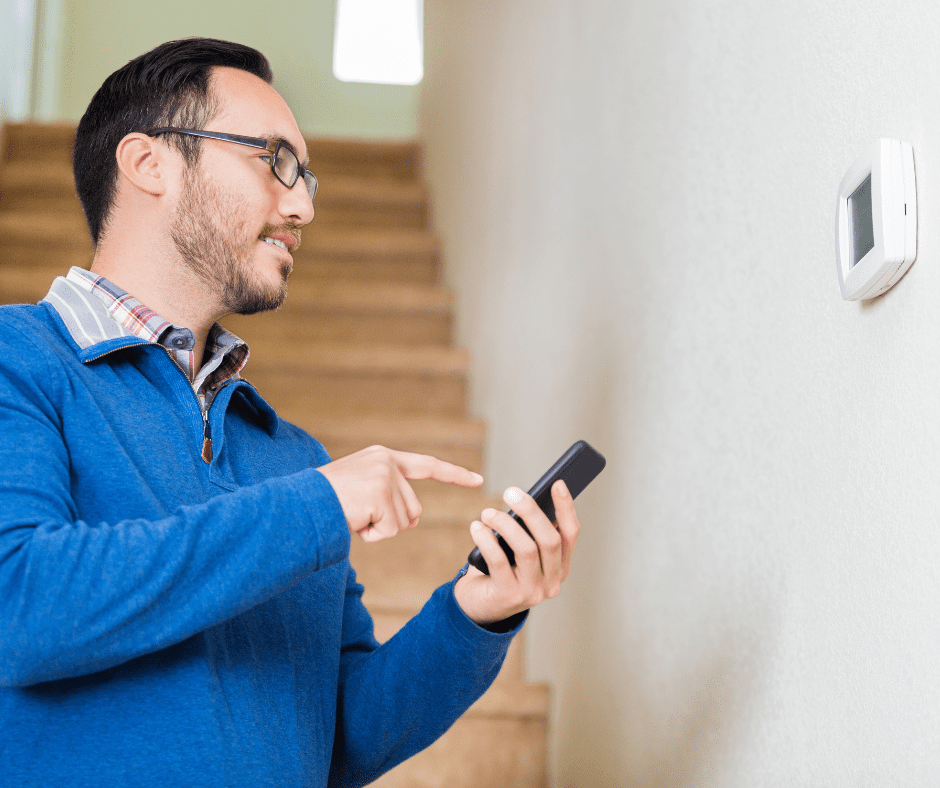
A smart thermostat learns your schedule, adjusts heating and cooling when you’re out or asleep, and lets you control your home from your phone. In a Canadian climate, where heating runs six to eight months a year in most provinces, that adds up.
What to look for:
- Compatibility with your specific furnace, air conditioner, or heat pump (variable-speed and dual-fuel systems have wiring quirks)
- Remote sensors for houses with hot and cold rooms
- Integration with your ecosystem (Apple Home, Google Home, Alexa, SmartThings)
Technician note: Most smart thermostat problems we get called out for aren’t the thermostat itself. They’re a missing C-wire, or a heat pump wired for the wrong control logic. Have it installed by someone who knows HVAC, not just electronics.
2. Smart leak detectors and automatic shut-off valves
Water damage is the single most common insurance claim in Canadian homes. A basic leak sensor tucked behind a dishwasher costs less than a dinner out. A whole-home shut-off valve that closes automatically when it detects a leak costs more, but it protects the entire house.
Where they matter most:
- Under the water heater
- Behind the dishwasher and washing machine
- Under sinks
- Near sump pumps and basement mechanical rooms
Technician note: If you’re renting or own an older water heater, add a sensor at the base. Tank failures rarely announce themselves.
3. Smart standby generators
A connected standby generator monitors itself, runs a weekly self-test, and pushes alerts to your phone if something’s off. During an outage, it starts automatically within seconds and keeps essentials running (furnace, fridge, sump pump, some lights and outlets, or the whole house depending on sizing).
When it makes sense:
- You’re on a rural or storm-prone grid
- You have a sump pump and a finished basement
- You work from home and can’t afford unplanned downtime
- You have medical equipment that needs consistent power
Sizing note: Generator sizing depends on what you want to run during an outage. Our team does an in-home load assessment (kitchen, mechanical room, panel, and any medical or work-from-home equipment) before quoting a size. Undersizing is the most common mistake homeowners make when buying online.
4. Smart EV chargers
If you drive electric or plan to, a smart Level 2 charger is worth more than a basic one. It schedules charging for off-peak hours, tracks energy use, integrates with your utility’s programs where available, and can load-share if you have two vehicles or limited panel capacity.
What to look for:
- Wi-Fi and app control
- Scheduling and off-peak automation
- Panel load management if you’re near your service capacity
- Proper installation by a licensed electrician (not a DIY plug-in)
Technician note: A lot of homes need a panel upgrade or a load calculation before a Level 2 charger goes in. Skip that step and you can trip your main breaker under load, or worse.
5. Connected indoor air quality
Smart air purifiers, humidifiers, and HRV or ERV systems can report filter life, humidity levels, and air quality readings straight to your phone. That matters most in tightly built modern homes where you can’t always feel when the air is stale, dry, or over-humidified.
When it’s worth it:
- Someone in the house has allergies or asthma
- You get static shock and condensation on windows all winter
- You have a newer, well-sealed home with an HRV or ERV
- You want automatic filter replacement reminders
Smart home upgrades that usually aren’t worth it
Not everything with an app improves your life. A few honest calls:
- Smart light bulbs everywhere. Fine for a few key rooms. Overkill (and expensive) as a whole-home replacement for regular light switches.
- Smart blinds in every window. A nice-to-have, not a need-to-have. The return on investment is comfort and convenience, not savings.
- Voice-controlled everything. Useful in the kitchen and living room. Rarely worth wiring into every appliance you own.
- Cheap unbranded smart plugs and cameras. Security and firmware support matters. Stick to reputable brands with a track record of updates.
What a good starting point looks like
If you’re building a smart home from scratch, here’s the order that makes sense for most Canadian households:
- Smart thermostat (biggest daily impact on comfort and running costs)
- Basic leak sensors at your water heater, dishwasher, and washing machine
- Smart smoke and CO detectors on every level of the home
- Smart doorbell and one or two outdoor cameras
- Level 2 EV charger if you drive electric
- Standby generator if outages disrupt your life
- Connected IAQ (purifier, humidifier, or HRV integration) if anyone has allergies or asthma
You don’t need to do all of it at once. Start with what protects the house and lowers what you’re already spending.
Where Reliance fits
We install and service the systems in a smart home that matter most: heating, cooling, heat pumps, water heaters, indoor air quality, plumbing (including leak detection and shut-off valves), electrical, generators, and EV chargers. Our licensed technicians handle the assessment, sizing, permits, and install, so the connected part actually works with the rest of your home instead of sitting half-configured in an app.
Reliance offers 24/7/365 live phone support and as-soon-as same-day repairs across most of Canada.
Frequently asked questions about smart homes
What is a smart home?
A smart home is a house where key systems (heating, cooling, lighting, water, security, or appliances) can be monitored and controlled remotely, usually through a phone app or a voice assistant. The goal is comfort, safety, and lower running costs.
Is a smart thermostat worth it in Canada?
For most Canadian homes, yes. Heating runs six to eight months a year in most provinces, and a smart thermostat trims waste when you’re out or asleep. Pairing it with a properly sized HVAC system matters more than any brand of thermostat.
Do smart leak detectors actually work?
Yes. Basic sensors alert you the moment moisture is detected. Whole-home automatic shut-off valves take it further by closing the main water line when a leak is detected, which is what actually prevents damage.
Do I need a smart home hub?
Not always. Many devices work directly with your phone or with Apple Home, Google Home, or Alexa. A dedicated hub matters more if you’re mixing brands and protocols (Zigbee, Z-Wave, Matter) and want everything on one system.
What’s the difference between a smart generator and a regular standby generator?
Both start automatically during an outage. A smart generator adds Wi-Fi monitoring, self-diagnostics, and phone alerts, so you know it’s ready before the next storm and get notified if maintenance is needed.
Can any electrician install a Level 2 EV charger?
Any licensed electrician can install one, but sizing and load management matter. Many homes need a panel assessment or an upgrade before a Level 2 charger is safe to add.
Is a smart home more vulnerable to hacking?
Any connected device carries some risk. The practical protections are simple: use reputable brands that push regular firmware updates, secure your Wi-Fi with a strong password, enable two-factor authentication on your accounts, and keep guest devices on a separate network.


Check out our latest Smart Home offers here!
See Latest OffersRelated Articles